Nutrients and Supplements for Eye Health: What the Research Shows
Walk into any pharmacy and the eye supplement shelf promises a lot. The research is narrower: a small set of nutrients has been tested in large trials, mostly in people with a specific eye condition. This page covers what those studies did and did not show, where the nutrients appear in food, safety limits, and how to read a label. It is general information and not a substitute for an exam by an eye doctor.
- The strongest supplement research is for people with intermediate or advanced AMD in one eye, not for healthy eyes.
- AREDS2 supported lutein and zeaxanthin as an alternative to beta-carotene, and omega-3s added no further benefit for AMD progression.
- Vitamin A is essential, but preformed vitamin A has an upper limit, and beta-carotene is a concern for people who smoke.
- Food such as leafy greens and fish is the better-supported starting point for most people.
- On a label, look for studied nutrients with stated amounts, and be cautious about botanical blends and cure-type claims.
What the research does and does not cover
Most of the strongest supplement research in eye health looks at one question: can certain nutrients slow the progression of age-related macular degeneration (AMD) in people who already have intermediate or advanced disease? That is a narrow question. The results do not automatically apply to healthy eyes, to younger people, or to other eye problems.[1]
The National Eye Institute describes many common eye conditions, including cataracts, glaucoma, dry eye and refractive errors. Each has different causes and different care.[2][3] A supplement that was studied for one condition should not be assumed to help another.
Two points are worth keeping in mind from the start:
- Supplements do not replace regular eye exams, which are how many eye diseases are found.
- No supplement has been shown to restore vision that has been lost.
Anyone with changes in vision should see an eye doctor for diagnosis and treatment before trying a supplement.
AREDS and AREDS2: the best-studied formulas
The Age-Related Eye Disease Studies (AREDS and AREDS2) were large trials sponsored by the National Eye Institute. They tested combinations of vitamins and minerals in people at risk of advanced AMD.[1]
The original AREDS formula contained vitamin C, vitamin E, beta-carotene, zinc and copper. In the study, people with intermediate AMD, or advanced AMD in one eye, who took the formula had a lower risk of progressing to advanced AMD than those who did not.[1] The reported doses were 500 mg vitamin C, 400 IU vitamin E, 15 mg beta-carotene, 80 mg zinc and 2 mg copper.[1]
AREDS2 then tested changes to that formula. It looked at adding lutein and zeaxanthin and omega-3 fatty acids, and at removing beta-carotene and lowering zinc.[1][4]
The benefit was seen in a defined group: people with intermediate AMD or advanced AMD in one eye. The studies did not show that these formulas prevent AMD in people with healthy eyes.[1] Readers who want background on the condition can find it on the macular degeneration page.
Lutein, zeaxanthin and omega-3s: what AREDS2 showed
Lutein and zeaxanthin are carotenoid pigments found in the macula, the central part of the retina. AREDS2 tested them as a replacement for beta-carotene. The NEI reports that a formula with lutein and zeaxanthin worked about as well as the original, and that it was a reasonable option for people who smoke or used to smoke.[1][4] For more on these pigments, see the page on lutein and zeaxanthin.
The studied amounts were 10 mg of lutein and 2 mg of zeaxanthin.[1]
Omega-3 fatty acids (DHA and EPA) were tested too. In AREDS2, adding them to the formula did not further reduce the risk of progression to advanced AMD.[4][1] That is a useful result for label reading: an omega-3 product is not shown by this trial to add protection for AMD on top of the vitamin and mineral formula.
What these trials did not show:
- That the formulas help people with no signs of AMD.
- That higher doses than those studied work better.
- That other ingredients sold in eye products have the same level of support.
Vitamin A and beta-carotene: needed, but more is not better
Vitamin A is essential for vision. The NIH Office of Dietary Supplements notes that severe deficiency can cause night blindness and a serious eye condition called xerophthalmia. Deficiency is uncommon in the United States but is a major problem in parts of the world.[5]
That does not mean extra vitamin A helps healthy eyes. Preformed vitamin A (retinol, found in animal foods and many supplements, often listed as retinyl palmitate) has an upper limit for adults of 3,000 mcg a day from food and supplements combined. Too much over time can be toxic, and high intake during pregnancy can cause birth defects.[5]
Beta-carotene is a plant pigment the body can convert to vitamin A. It was part of the original AREDS formula, but the NEI notes that beta-carotene has been linked to higher lung cancer risk in people who smoke. That is a main reason AREDS2 tested lutein and zeaxanthin in its place.[1]
People who take a multivitamin and a separate eye supplement should add up the vitamin A from both products.
Food sources worth knowing
For most people, food is the first place to look. The NEI recommends a healthy diet that includes dark, leafy greens and fish as part of keeping eyes healthy.[6]
General food sources for the nutrients above include:
- Lutein and zeaxanthin: spinach, kale, collard greens and other dark leafy vegetables. Eggs and corn also contain them.
- Omega-3 fatty acids: fatty fish such as salmon, sardines and trout.
- Vitamin A: liver, fish, and dairy supply preformed vitamin A. Orange and dark green vegetables supply carotenoids the body can convert.[5]
- Vitamin C: citrus fruit, peppers and berries.
- Vitamin E: nuts, seeds and vegetable oils.
- Zinc: shellfish, meat, beans and nuts.
The AREDS formulas used doses that are hard to reach through food alone, especially for zinc and vitamin E.[1] That is one reason doctors may discuss a supplement for people with intermediate AMD. For everyone else, a varied diet is the better-supported starting point.
Other habits matter as well. The NEI also lists not smoking, wearing sunglasses and getting regular eye exams among its steps for healthy eyes.[6]
How to judge an eye supplement label
Labels vary a lot, and marketing language can run ahead of the evidence. A few checks help.
1. Look for the studied nutrients and amounts
Compare the label with the AREDS2-type amounts: vitamin C, vitamin E, zinc, copper, lutein and zeaxanthin.[1] If a product lists a nutrient but not the amount, there is no way to tell whether it matches anything that was studied. A line such as "AREDS2 formula ingredients" without a breakdown is not enough to judge.
2. Treat extra botanicals with caution
Ingredients such as bilberry, ginkgo, grape seed extract, saffron or eyebright are common in eye blends. The sources used for this page do not establish that they protect eye health, so they should not be treated as proven. The same applies to a long list of ingredients at small, unstated doses.
3. Check vitamin A and beta-carotene
Look at whether vitamin A is listed as retinyl palmitate or as beta-carotene, and how much.[5] People who smoke or used to smoke should talk to a doctor before taking any product with beta-carotene.[1]
4. Watch the claims
Be wary of wording that says a product cures, reverses or prevents an eye disease, or restores vision. The research does not support that. Claims about relief from tired eyes also deserve caution. The American Academy of Ophthalmology emphasizes habits such as breaks and blinking for digital eye strain rather than supplements.[7]
5. Check for a match with the condition
If the concern is gritty or irritated eyes, see the page on dry eyes. If vision is cloudy, see an eye doctor, since cataracts and other conditions need an exam, not a supplement.
Safety and when to talk to a doctor
Supplements can interact with medicines and can cause harm at high doses. Some points to raise with a doctor or pharmacist:
- Zinc and copper: high zinc doses were used in AREDS, and copper was added to the formula.[1] Long-term zinc and copper doses should be reviewed by a clinician.
- Vitamin A: the upper limit applies to preformed vitamin A, and pregnancy raises extra concerns.[5]
- Beta-carotene: linked to lung cancer risk in people who smoke.[1]
- Blood thinners and planned surgery: some herbal ingredients can affect bleeding, so tell the care team about every product taken.
An eye doctor can say whether a dilated exam shows signs of AMD, and whether an AREDS-type formula fits that person's situation. Sudden vision loss, flashes, new floaters or eye pain need prompt care, not a supplement trial.[3]
Eye supplements we have reviewed
These are the 4 eye-health supplements we have reviewed on HealthSupplements.best. None of them is proven to treat or prevent eye health; talk to your eye doctor before starting any supplement, especially if you take other medicines.
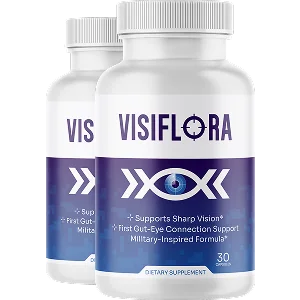
VisiFlora
Vitamin C, vitamin E, copper and selenium are listed. Vitamin C, vitamin E and copper were part of the AREDS formula, which was studied in people with intermediate or advanced AMD, though the label does not show whether amounts match. Astaxanthin, grape seed extract, rutin, quercetin, taurine, alpha lipoic acid, ginkgo, coleus forskohlii and eyebright are not supported for eye health by the sources used here.
Listed ingredients: Astaxanthin, Vitamin C, Vitamin E, Copper, Selenium, Chromium
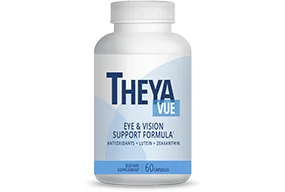
TheyaVue
Lutein, zeaxanthin, vitamin C, vitamin E and zinc relate to nutrients tested in AREDS2, which studied them in people with intermediate or advanced AMD, not in healthy eyes. Whether the amounts match the studied doses cannot be judged from the ingredient list alone. Bilberry extract, rutin and calcium are not supported for eye health by the sources used here.
Listed ingredients: Lutein, Zeaxanthin, Vitamin C, Calcium, Vitamin E, Bilberry Extract
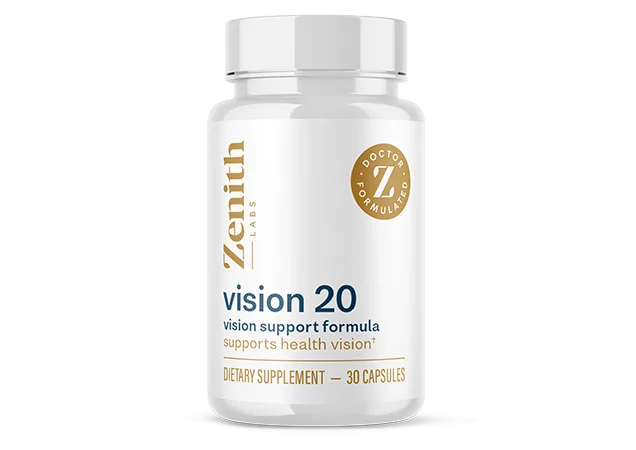
Vision 20
Lutein, zeaxanthin and zinc relate to the AREDS2 research, and beta-carotene and retinyl palmitate relate to vitamin A. Beta-carotene has been linked to lung cancer risk in people who smoke, and preformed vitamin A has an upper intake limit. Lycopene, rose hips, taurine, grape seed extract and bilberry are not supported for eye health by the sources used here.
Listed ingredients: Lutein, Zeaxanthin, Zinc, Beta-carotene, Lycopene, Rose Hips
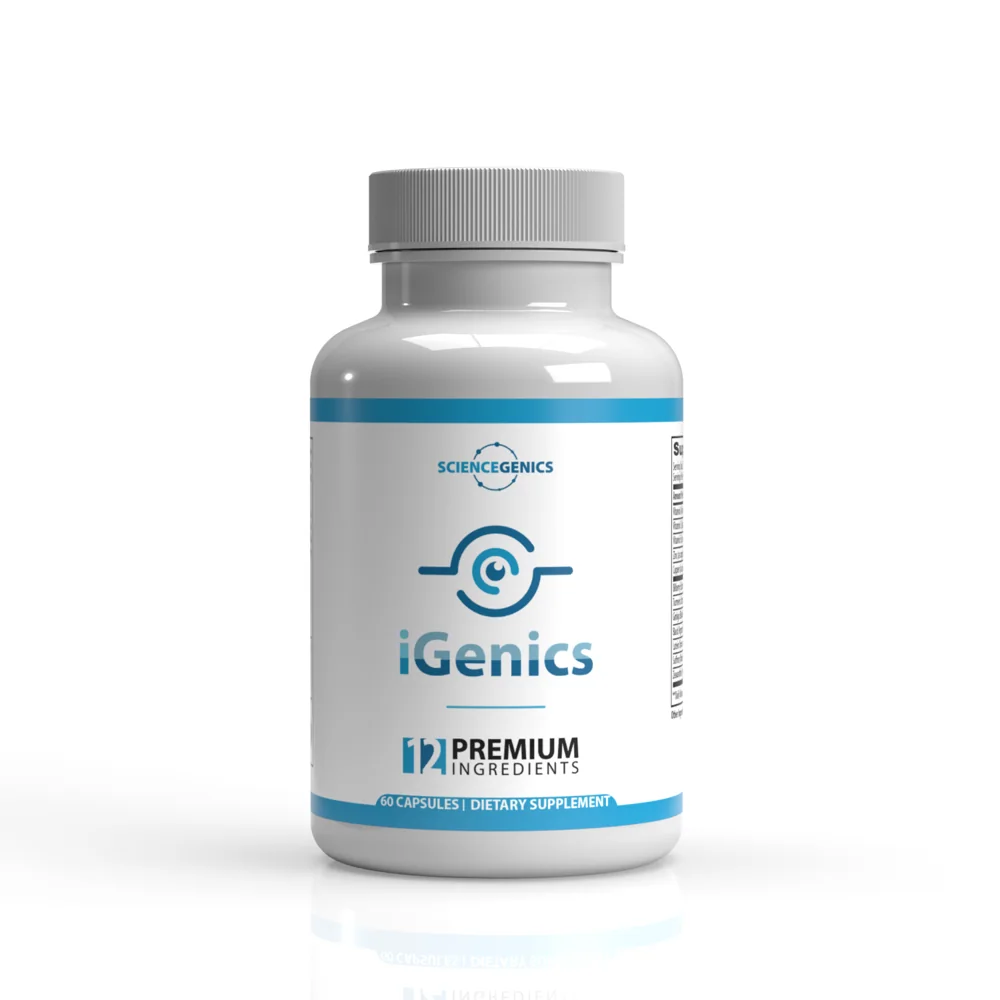
iGenics
The label refers to AREDS-2 formula ingredients without itemizing them, so it is not possible to compare amounts with the studied formula. Ginkgo biloba, bilberry, saffron and turmeric with BioPerine are not supported for eye health by the sources used here.
Listed ingredients: Ginkgo biloba, AREDS-2 formula ingredients (not itemized), Bilberry, Saffron, Turmeric + BioPerine
Frequently asked questions
Do eye vitamins improve vision?
The AREDS studies tested whether certain vitamins and minerals could slow progression to advanced AMD in people at risk. They did not show that supplements restore lost vision or improve eyesight in healthy eyes.[1] An eye doctor can advise on whether a supplement fits a specific situation.
Should people with healthy eyes take an AREDS2-type supplement?
The benefit was seen in people with intermediate AMD or advanced AMD in one eye. The studies did not show the same benefit for people without these signs.[1] A varied diet and regular eye exams are the usual starting point.
Are lutein and zeaxanthin safe?
They were studied in AREDS2 at 10 mg and 2 mg a day and were used as a replacement for beta-carotene.[1][4] Anyone with a medical condition, or taking medicines, should check with a doctor or pharmacist before starting a supplement.
Can too much vitamin A harm the eyes or body?
Yes. Preformed vitamin A has an adult upper limit of 3,000 mcg a day, and excess intake can be toxic and can harm a developing baby in pregnancy.[5] Add up all sources, including multivitamins and eye formulas.
Sources
- National Eye Institute: Age-Related Eye Disease Studies (AREDS/AREDS2)
- National Eye Institute: Learn about eye health
- MedlinePlus: Eye diseases
- AREDS2 Research Group. JAMA 2013: lutein + zeaxanthin and omega-3 fatty acids for AMD
- NIH Office of Dietary Supplements: Vitamin A fact sheet
- National Eye Institute: Keep your eyes healthy
- American Academy of Ophthalmology: Computers, digital devices and eye strain